Blog

Charlie Herrera VacaflorSenior Legal Consultant
- Employment Standards
Home
Resources
Health & Safety

Michelle Ann Zoleta, Health & Safety Team Manager
(Last updated )
Michelle Ann Zoleta, Health & Safety Team Manager
(Last updated )
Fire safety compliance in Canadian workplaces is shaped by a combination of federal and provincial regulations. These rules are designed to prevent fires, protect workers, and reduce property damage across all types of work environments.
Each province and territory sets its own fire safety requirements, which are often based on national model codes. This creates some differences in how compliance is managed from one region to another.
Workplace fire safety laws are not only about preventing fires. They also outline how to respond if a fire occurs, how to manage fire risks, and how to protect everyone on-site.
Understanding the components of fire safety compliance begins with knowing what a fire safety plan is.
A workplace fire safety plan is a written document that outlines how to prevent fires and respond to fire emergencies. In Canada, these plans are required by provincial fire codes, which follow guidelines from the National Fire Code of Canada.
The plan includes instructions for:
Each province has different rules about when fire safety plans are required. Generally, buildings with higher occupancy or specific fire risks need formal plans approved by local fire authorities.
A complete fire safety plan helps ensure everyone knows what to do during a fire emergency. It's the foundation of workplace fire safety compliance and helps protect both lives and property.
Fire safety in Canada is regulated at both federal and provincial levels. The Canada Occupational Health and Safety Regulations set basic requirements for federally regulated workplaces, while the National Fire Code provides technical standards that provinces adapt to their needs.
Provincial requirements vary significantly:
Fire safety plans typically need review when building use changes or new fire hazards are introduced. Most provinces require annual reviews at minimum.
Non-compliance penalties range from fines to stop-work orders, depending on the severity of violations and the province where the workplace is located.
A fire risk assessment identifies potential fire hazards in your workplace and evaluates existing safety measures. This assessment forms the basis of your fire safety plan and helps prioritize improvements.
The process involves three main steps:
Common workplace fire hazards include:
Different industries face unique hazards. Manufacturing facilities might have welding equipment and flammable chemicals, while offices typically deal with electrical equipment and paper storage risks.
Simple checklists can help identify these hazards systematically. Walk through your workplace looking specifically for potential ignition sources and fuel materials that could burn.
After identifying hazards, examine what safety measures are already in place:
You should document gaps in protection, such as missing equipment, inadequate training, or blocked exits. Prioritize issues based on their potential impact and likelihood of causing a fire.
Create an action plan to address the gaps found during your assessment:
Follow up to ensure corrective actions have been completed and are effective. Keep records of all assessments and improvements for compliance purposes.
Preventing workplace fires involves identifying and controlling risks before they can cause harm. These preventive measures form the core of any fire safety plan.
Exit routes allow workers to escape quickly during a fire. These pathways must be:
Good housekeeping significantly reduces fire risks. This includes:
Regular inspections help ensure exit routes remain clear and fire hazards are promptly addressed.
Many workplace fires start from common ignition sources that can be easily controlled:
Regular maintenance of equipment helps prevent mechanical failures that could lead to fires. Follow manufacturer recommendations for servicing heating systems, machinery, and electrical components.
Flammable materials require special handling under WHMIS (Workplace Hazardous Materials Information System) guidelines:
Proper labeling ensures everyone knows which materials present fire hazards. Train employees on safe handling procedures for all flammable substances in the workplace.
An evacuation plan explains how to safely exit a building during a fire emergency. This plan is required by provincial fire codes and must be accessible to all employees.
Evacuation maps show the paths from various locations to the nearest exits. These maps should:
Simple mapping tools like office software or specialized safety planning applications can help create clear, professional evacuation maps.
Assembly points are safe locations outside the building where employees gather after evacuating. When selecting assembly points:
At these assembly points, supervisors can account for all employees and communicate further instructions during the emergency.
Every employee needs to understand the evacuation plan before an emergency occurs:
Document all training to demonstrate compliance with fire safety regulations. Keep records of who received training and when it was provided.
Clear assignments help ensure an organized response during fire emergencies. These roles support effective evacuation and reduce confusion.
Fire marshals (also called wardens) help coordinate evacuation efforts. When selecting fire marshals, look for employees who:
Fire marshals typically check assigned areas during evacuations, assist others in exiting safely, and report to a designated meeting point after evacuation.
Beyond fire marshals, certain employees may need specialized training:
Document all training provided to these key responders. Refresher training helps maintain skills and knowledge of emergency procedures.
Fire safety equipment detects, alerts, and suppresses fires in the workplace. Regular maintenance ensures this equipment works when needed.
Fire detection and suppression systems form the first line of defense:
These systems require regular testing:
Keep records of all inspections and maintenance for compliance purposes.
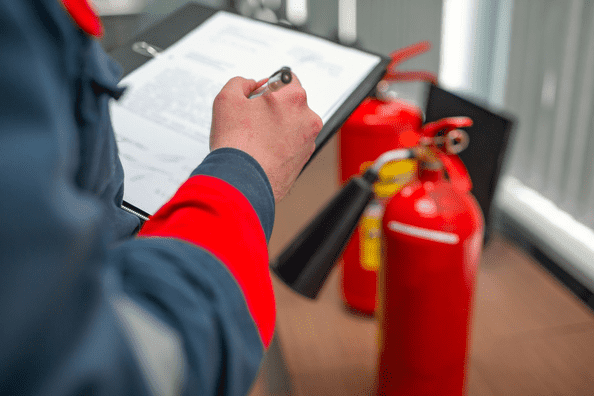
Portable fire extinguishers allow trained employees to fight small fires before they spread. Different types of extinguishers work on different types of fires:
Extinguishers need monthly visual checks and annual professional maintenance. Train employees on when and how to use extinguishers safely.
Training prepares employees to respond appropriately during fire emergencies. This includes understanding evacuation procedures and knowing how to use safety equipment.
Fire drills practice evacuation procedures under controlled conditions. Most workplaces conduct drills at least annually, though some higher-risk environments may require more frequent practice.
After each drill:
These practice sessions help identify weaknesses in the emergency plan before a real fire occurs.
Fire safety education should continue beyond initial training:
Effective training uses various methods including hands-on practice, written materials, and discussion of real scenarios.
Proper documentation demonstrates compliance with fire safety regulations and helps identify areas for improvement.
Maintain records of:
Most provinces require keeping these records for at least 2 to 5 years. Organized documentation helps during regulatory inspections and insurance reviews.
Review and update your fire safety plan:
Communicate all updates to employees and provide training on any significant changes to procedures.
Whether you need assistance developing health & safety policies, have a question or are looking for support with risk assessments – Peninsula can help.
We will help you streamline your processes, update policies and workplace documentation, and ensure you are compliant with laws. We have a team of consultants available 24/7 via telephone to answer all your queries. We also offer a smart health and safety software to make your daily health & safety tasks quick and convenient.
To learn more about how our services can benefit your business, call an expert today at 1 (833) 247-3652.
Home
Resources
Health & Safety
Blog
Blog
Blog